
Flaxseed oil has become one of the most popular plant-based sources of omega-3 fatty acids, making it a preferred choice among health-conscious consumers, vegetarians, and fitness enthusiasts. However, not all flaxseed oils available in the market offer the same level of quality, purity, freshness, or nutritional value.
Many buyers compare brands based only on price or packaging, but the true quality of flaxseed oil depends on several important factors such as extraction method, omega-3 content, freshness, laboratory testing, and transparency.
If you’re planning to buy cold-pressed flaxseed oil, understanding these quality indicators can help you make an informed decision.
In this guide, we’ll explore seven essential factors that can help you identify high-quality flaxseed oil before buying and understand why laboratory testing plays a crucial role in ensuring product quality.
Why Flaxseed Oil Quality Matters
Flaxseed oil is valued primarily for its naturally occurring alpha-linolenic acid (ALA), a plant-based omega-3 fatty acid. Since omega-3 fats are sensitive to heat, light, and oxygen, the way flaxseed oil is produced, stored, and packaged significantly impacts its nutritional value.
High-quality flaxseed oil generally offers:
- Better omega-3 retention
- Greater freshness
- Improved purity
- Better consumer transparency
- Consistent nutritional value
On the other hand, poor-quality oil may lose nutritional value over time due to oxidation or improper processing.
Before choosing a flaxseed oil brand, it’s important to understand what separates premium-quality products from average ones.
1. Check If the Oil Is Cold Pressed
One of the first things you should verify is whether the flaxseed oil is cold pressed.
Cold pressing is a mechanical extraction process that helps preserve the oil’s natural nutrients without exposing it to excessive heat. Since omega-3 fatty acids are sensitive to high temperatures, cold pressing helps maintain the oil’s nutritional profile.
Cold Pressed vs Heat Processed Oil
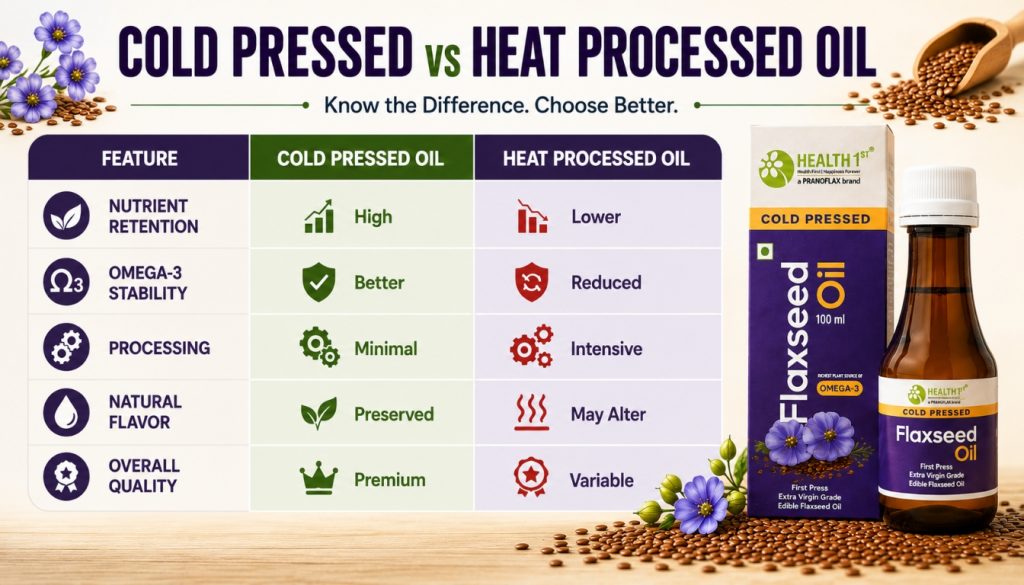
| Feature | Cold Pressed Oil | Heat Processed Oil |
|---|---|---|
| Nutrient Retention | High | Lower |
| Omega-3 Stability | Better | Reduced |
| Processing | Minimal | Intensive |
| Natural Flavor | Preserved | May Alter |
| Overall Quality | Premium | Variable |
When shopping for flaxseed oil, always check the label to confirm that the product is cold pressed.
Looking for a quality cold-pressed product? Read our detailed guide on Best Flaxseed Oil in India: Price, Quality Comparison & Buying Tips.
2. Look at the Omega-3 Content
Omega-3 content is one of the most important indicators of flaxseed oil quality.
Flaxseed oil is known for its naturally high concentration of alpha-linolenic acid (ALA), which is a plant-based omega-3 fatty acid commonly included in balanced wellness-focused diets.
Brands that openly disclose their omega-3 content demonstrate transparency and provide consumers with valuable information about the nutritional profile of the product.
For example, independent laboratory testing of Pranoflax Cold Pressed Flaxseed Oil showed:
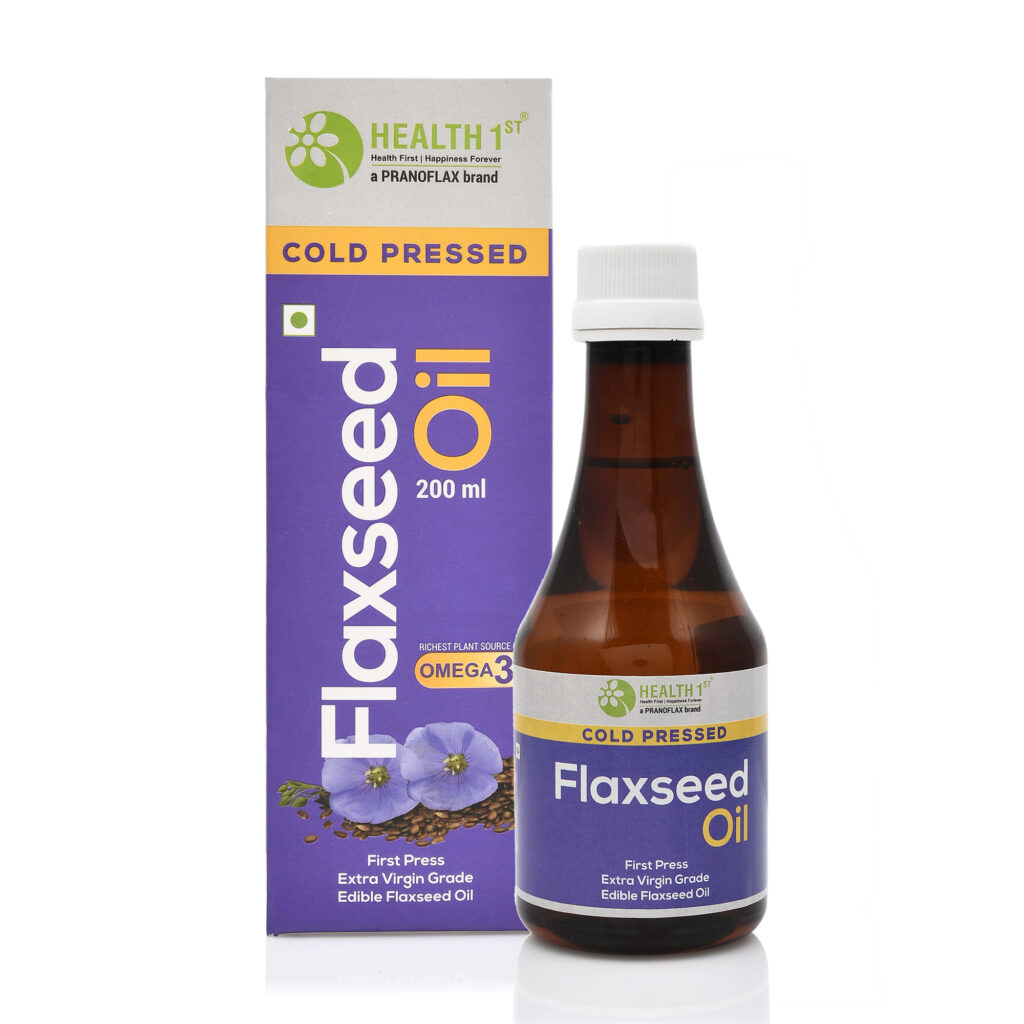
Omega-3 Content: 52.93 g per 100 g
This indicates a naturally rich omega-3 profile that reflects the nutritional characteristics consumers expect from high-quality flaxseed oil.
When comparing products, look for brands that clearly disclose omega-3 levels rather than making vague claims.
If you’re comparing different omega-3 sources, you may also find our guide on Flaxseed Oil vs Fish Oil: Which Is Better for Health?.
3. Verify Heavy Metal Testing
Quality is not only about nutrition—it is also about safety.
Heavy metal testing helps evaluate whether a product meets safety standards. Independent laboratory testing can identify the presence of contaminants such as lead, arsenic, cadmium, and mercury.
Reputable brands often conduct third-party testing to ensure product quality and transparency.
In the case of Pranoflax Cold Pressed Flaxseed Oil, the laboratory report indicated:
Heavy Metals: BLQ (Below Limit of Quantification)
This means the tested heavy metal parameters were below measurable limits according to laboratory standards.
When selecting flaxseed oil, choosing products supported by independent testing can provide greater confidence in product quality.
4. Check the Peroxide Value
Freshness is another important factor when evaluating flaxseed oil quality.
One of the most commonly used indicators of freshness is peroxide value.
Peroxide value measures the extent of oxidation in oil. As oils become exposed to air, light, and heat over time, oxidation can occur. Lower peroxide values generally indicate fresher oil.
For Pranoflax Cold Pressed Flaxseed Oil, the laboratory report showed:
Peroxide Value: BLQ
This result reflects a very low oxidation level at the time of testing.
Consumers should always store flaxseed oil properly and follow storage instructions to help maintain freshness after opening.
5. Review the Acid Value
Another useful quality parameter is acid value.
Acid value helps assess the condition of the oil and can provide insight into processing and storage quality.
Generally, lower acid values are considered favorable indicators of quality.
The laboratory analysis of Pranoflax Cold Pressed Flaxseed Oil reported:
Acid Value: 0.52 mg KOH/g
This value reflects the quality characteristics of the tested product and supports overall product consistency.
Although many consumers may not be familiar with acid value, it is commonly used by laboratories and quality-control teams when evaluating edible oils.
6. Check Manufacturing and Packaging Details
Even high-quality flaxseed oil can lose quality if packaging and storage conditions are not properly maintained.
Before purchasing, check the product label for:
- Manufacturing date
- Expiry date
- Batch number
- Storage instructions
- Packaging details
Good-quality flaxseed oil is usually packaged in containers designed to protect the oil from excessive exposure to light and air.
Freshness plays a major role in preserving omega-3 content, which is why manufacturing and packaging information should never be ignored.
7. Choose Brands That Offer Transparency
Transparency is one of the strongest indicators of a quality-focused brand.
Brands that openly provide information about:
- Ingredients
- Manufacturing practices
- Laboratory testing
- Nutritional values
- Product sourcing
often demonstrate a greater commitment to quality assurance.
Consumers today are increasingly looking for evidence rather than marketing claims. Brands that provide third-party testing reports help buyers make informed purchasing decisions.
At Pranoflax, transparency is a key part of our quality approach. Our Cold Pressed Flaxseed Oil undergoes independent laboratory testing, and important quality parameters such as omega-3 content, peroxide value, acid value, and heavy metal testing results are made available to help consumers make informed choices.
Transparency helps build trust and allows consumers to better understand what they are purchasing.
High-Quality vs Low-Quality Flaxseed Oil
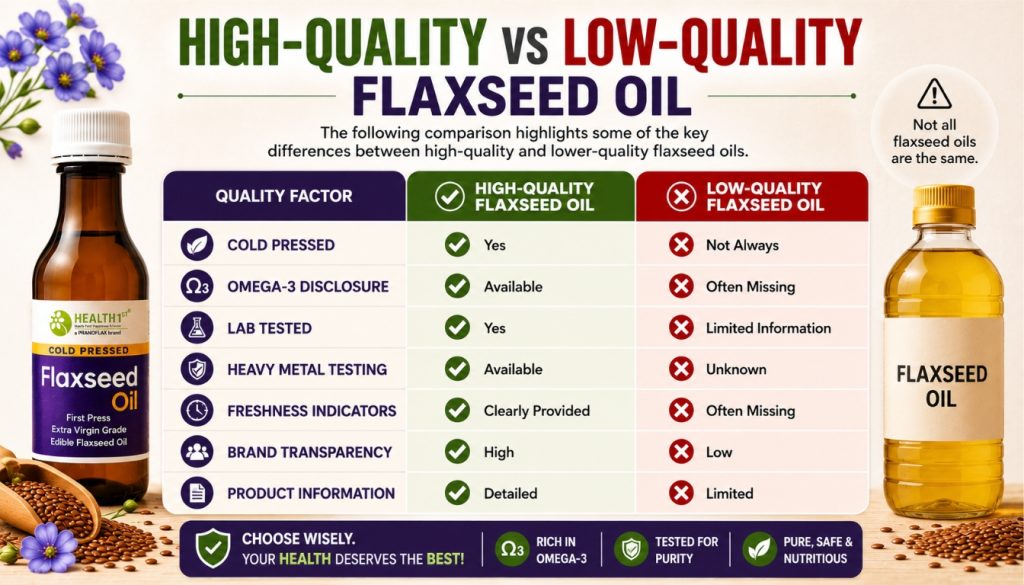
The following comparison highlights some of the key differences between high-quality and lower-quality flaxseed oils.
| Quality Factor | High-Quality Flaxseed Oil | Low-Quality Flaxseed Oil |
|---|---|---|
| Cold Pressed | Yes | Not Always |
| Omega-3 Disclosure | Available | Often Missing |
| Lab Tested | Yes | Limited Information |
| Heavy Metal Testing | Available | Unknown |
| Freshness Indicators | Clearly Provided | Often Missing |
| Brand Transparency | High | Low |
| Product Information | Detailed | Limited |
Understanding these differences can help consumers identify products that prioritize quality and transparency.
Some consumers also compare flaxseed oil with flaxseed powder. Learn more in Flaxseed Oil vs Flaxseed Powder: Which Is Better for Weight Loss & Hair?
Understanding a Flaxseed Oil Lab Report
Many consumers see laboratory reports but are unsure how to interpret the information.
Here are some common parameters often found in flaxseed oil analysis reports.
| Parameter | What It Indicates |
|---|---|
| Omega-3 | Nutritional profile |
| Omega-6 | Fatty acid composition |
| Heavy Metals | Product safety |
| Peroxide Value | Freshness |
| Acid Value | Quality assessment |
| Iodine Value | Oil composition |
These measurements help provide a more complete understanding of product quality beyond marketing claims.
Pranoflax Lab Report Explained
To provide greater transparency, Pranoflax Cold Pressed Flaxseed Oil has undergone independent laboratory testing.
Quality Snapshot
| Parameter | Result |
|---|---|
| Omega-3 | 52.93 g/100g |
| Omega-6 | 12.23 g/100g |
| Heavy Metals | BLQ |
| Peroxide Value | BLQ |
| Acid Value | 0.52 mg KOH/g |
| Iodine Value | 178.29 |
These results help consumers better understand important quality indicators and demonstrate the value of independent product testing.
For those interested in reviewing the complete laboratory analysis, you can access the full report using the “View Full Lab Report” button provided below this section.
Final Checklist Before Buying Flaxseed Oil
Before purchasing flaxseed oil, use this quick checklist:
Cold Pressed Extraction
Clearly Mentioned Omega-3 Content
Third-Party Laboratory Testing
Heavy Metal Testing
Low Oxidation Indicators
Transparent Brand Information
Proper Packaging
Clear Manufacturing and Expiry Details
A quality product should meet most or all of these criteria.
While choosing quality flaxseed oil is important, many consumers also compare whole flax seeds with chia seeds when building a healthy diet. Both are popular plant-based superfoods with unique nutritional benefits. Explore our detailed comparison: Chia Seeds vs Flax Seeds: Which Is Better for Health?
Why Choose Pranoflax Cold Pressed Flaxseed Oil
Pranoflax Cold Pressed Flaxseed Oil is developed with a focus on quality, transparency, and nutritional integrity.
Independent laboratory testing and transparent quality reporting help consumers verify important parameters such as omega-3 content, peroxide value, and heavy metal testing results.
Key highlights include:
- Cold pressed extraction process
- Rich plant-based omega-3 profile
- Independent laboratory testing
- Heavy metals tested
- Freshness indicators verified
- Transparent quality information
The combination of cold pressing and laboratory verification helps consumers make informed choices when selecting flaxseed oil.
Conclusion
Choosing flaxseed oil should involve more than simply comparing prices or packaging.
Factors such as extraction method, omega-3 content, freshness, laboratory testing, and transparency all contribute to overall product quality.
By understanding these seven essential quality indicators, consumers can make more informed purchasing decisions and identify products that align with their expectations.
Whether you are new to flaxseed oil or looking to switch brands, checking quality parameters before buying can help ensure you select a product that meets high standards of purity, freshness, and nutritional value.
If you’re interested in practical ways to use flaxseed oil daily, read Can You Cook With Flaxseed Oil? Best Uses, Benefits & Cooking Tips.
Frequently Asked Questions
How can I check flaxseed oil quality before buying?
Look for cold-pressed extraction, omega-3 disclosure, third-party testing, freshness indicators, and transparent product information.
What is a good omega-3 level in flaxseed oil?
Higher omega-3 levels generally indicate a richer nutritional profile. Consumers should compare products that openly disclose omega-3 content.
What does BLQ mean in a lab report?
BLQ stands for Below Limit of Quantification, meaning the tested parameter was below measurable limits according to laboratory standards.
Why is peroxide value important?
Peroxide value helps indicate freshness and oxidation levels in edible oils.
Is cold-pressed flaxseed oil better?
Cold pressing helps preserve the natural nutritional characteristics of flaxseed oil by avoiding excessive heat during extraction.
Why is laboratory testing important?
Laboratory testing provides independent verification of quality, safety, and nutritional parameters.
How should flaxseed oil be stored?
Follow the storage instructions on the label and protect the oil from excessive heat, light, and air exposure.
Why should consumers choose transparent brands?
Transparent brands provide information that helps consumers evaluate quality, safety, and nutritional value more confidently.
0 Comments