
Flaxseed oil is becoming more popular in health and wellness circles. It’s packed with omega-3 fatty acids, which are great for your health. Knowing the benefits of flaxseed oil can help you eat better and feel better. This guide will cover its uses, nutritional value, and how to pick the best flaxseed oil. With the right info, you can choose wisely for your health goals.
Key Takeaways
- Flaxseed oil is a powerful source of omega-3 fatty acids.
- Understanding the benefits of flaxseed oil can enhance your dietary choices.
- Choosing the best flaxseed oil is key for the most health benefits.
- The oil may help with inflammation and heart health.
- Using it right and in the right amount can avoid side effects.
What is Flaxseed Oil?
Flaxseed oil is extracted from the seeds of the flax plant (Linum usitatissimum). The oil is typically produced using a cold-pressed extraction process, which preserves its natural nutrients, especially omega-3 fatty acids.
For centuries, flaxseeds have been used in traditional diets for their health-supporting properties. Today, flaxseed oil is widely recognized as one of the best plant-based omega-3 supplements.
The primary omega-3 fatty acid found in flaxseed oil is alpha-linolenic acid (ALA). This essential fatty acid plays a vital role in maintaining heart health, reducing inflammation, and supporting overall well-being.
Because it is completely plant-based, flaxseed oil is especially popular among vegans and vegetarians looking for an alternative to fish oil omega-3 supplements.
Cold-pressed flaxseed oil retains its natural nutrients and purity, making it one of the healthiest edible oils available for daily consumption.
Flaxseed Oil Benefits Overview
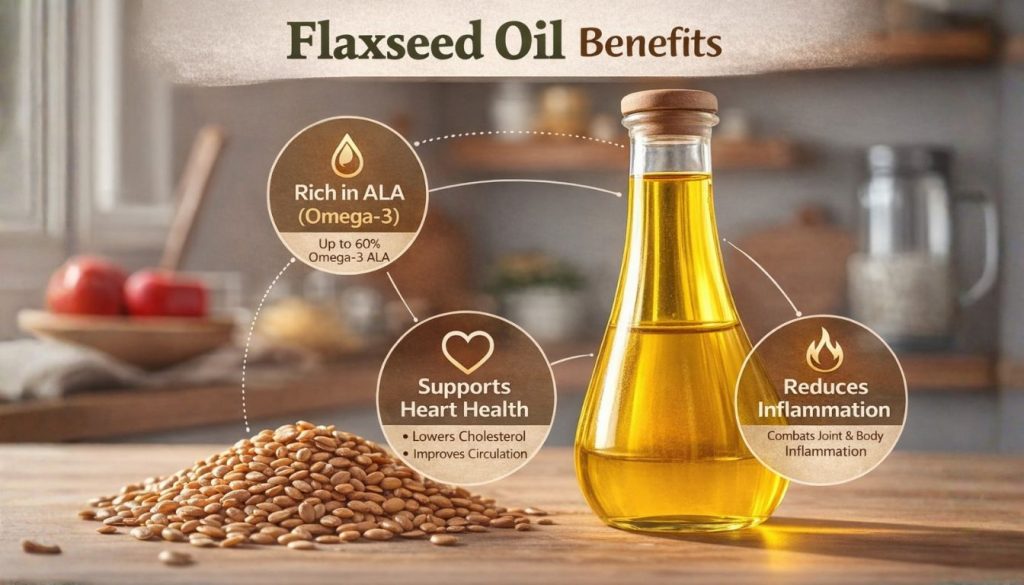
Flaxseed oil is packed with amazing benefits for your health. It’s rich in omega-3 fatty acids, like alpha-linolenic acid (ALA). This makes it a great heart health supplement, boosting your overall heart health. Adding flaxseed oil to your diet can be a smart move.
Rich in Omega-3 Fatty Acids
Flaxseed oil is one of the richest plant sources of omega-3 fatty acids. The main omega-3 found in flaxseed oil is alpha-linolenic acid (ALA).
ALA helps reduce bad cholesterol levels (LDL) and supports healthy cholesterol balance. Regular intake of omega-3 fatty acids is associated with improved cardiovascular health.
Because of this, many health experts consider flaxseed oil an effective natural omega-3 supplement.
Support for Heart Health
One of the most widely recognized benefits of flaxseed oil is its ability to support heart health.
Research suggests that flaxseed oil may help:
- Lower blood pressure
- Improve cholesterol balance
- Reduce risk of heart disease
- Support healthy blood circulation
Adding flaxseed oil to your daily diet can be a simple way to support long-term cardiovascular wellness.
Potential Anti-Inflammatory Properties
Flaxseed oil also has anti-inflammatory properties. Omega-3s, like ALA, can reduce body inflammation. This can help with chronic conditions and improve overall health. Using flaxseed oil can be a step towards a healthier lifestyle.
Understanding Flaxseed Omega 3
The omega-3 fatty acid found in flaxseed oil is known as alpha-linolenic acid (ALA). This fatty acid is considered essential because the body cannot produce it on its own.
ALA is different from the omega-3 fatty acids EPA and DHA, which are mainly found in fish oil. However, the body can convert small amounts of ALA into EPA and DHA.
Despite the lower conversion rate, flaxseed oil remains one of the best plant-based omega-3 sources.
Increasing intake of flaxseed omega 3 may help support:
- Brain health
- Cognitive function
- Heart health
- Healthy metabolism
- Reduced inflammation
| Type of Omega-3 | Source | Conversion in the Body | Key Benefits |
|---|---|---|---|
| ALA (Alpha-Linolenic Acid) | Flaxseed oil, chia seeds, walnuts | Converts to EPA/DHA in small amounts | Heart health, anti-inflammatory support |
| EPA (Eicosapentaenoic Acid) | Fish oil, algae | Directly usable | Reduces inflammation |
| DHA (Docosahexaenoic Acid) | Fish oil, algae | Directly usable | Brain and eye health |
Nutrition Profile of Flaxseed Oil
Flaxseed oil is known for its taste and health benefits. It’s packed with alpha linolenic acid and other essential fatty acids. These nutrients are key for a healthy diet.
Alpha Linolenic Acid (ALA) Content
Flaxseed oil typically contains 50–60% alpha-linolenic acid (ALA), making it one of the richest plant-based omega-3 oils available.
ALA plays an important role in:
- Supporting cardiovascular health
- Reducing inflammation
- Maintaining healthy cell function
Because of this high ALA concentration, flaxseed oil is often recommended as a natural omega-3 supplement.
Essential Fatty Acids Breakdown
Flaxseed oil has both omega-3 and omega-6 fatty acids. These are important for our body’s functions. It has a balanced mix of these fatty acids, which is good for our health.
Here’s how flaxseed oil compares to other oils:
| Oil Type | Omega-3 Content (%) | Omega-6 Content (%) |
|---|---|---|
| Flaxseed Oil | 50-60 | 15-25 |
| Canola Oil | 10-12 | 20-30 |
| Sunflower Oil | 0-0.1 | 65-70 |
This table shows flaxseed oil has more omega-3s than many oils. Its fatty acid mix makes it a great choice for nutrition.
Uses of Flaxseed Oil
Flaxseed oil is great for health and beauty. It can be taken daily to boost wellness. It also works wonders on the skin, making it a top choice for natural skincare.
Daily Supplementation
Many people take flaxseed oil as a daily dietary supplement to increase their omega-3 intake.
Most nutrition experts recommend 1–2 tablespoons of flaxseed oil per day to support heart health and overall wellness.
Flaxseed oil can be added to:
- Smoothies
- Salad dressings
- Yogurt or cereals
- Healthy bowls
However, flaxseed oil should not be used for high-heat cooking, as heat can damage its omega-3 fatty acids.
Skin and Hair Applications
Flaxseed oil is amazing for your skin and hair. It makes your skin hydrated and smooth, and even fights aging signs. It’s great for dry skin, leaving you with a glowing face.
For your hair, it adds shine and controls frizz. It also strengthens hair follicles, leading to healthier, shinier hair.
How to Choose the Best Flaxseed Oil
Choosing the right flaxseed oil involves a few key steps. First, check where the flaxseeds come from. Opt for oils made from organic, high-quality flaxseeds. This ensures the oil is pure and packed with nutrients.
The way the oil is extracted is also important. Cold-pressed oil keeps more of the omega-3 fatty acids than oils made with heat or chemicals. This method keeps the oil’s health benefits intact.
Look for organic certifications to confirm the oil’s quality. These standards mean the oil is free from harmful chemicals. Also, choose bottles that protect the oil from light. Light can damage the oil over time.
Don’t forget to check the oil’s expiration date. Fresh oil tastes better and is more nutritious. Reading online reviews can also help you find the best flaxseed oil.
By keeping these tips in mind, you can pick a flaxseed oil that’s good for your health and quality.
Flaxseed Oil Price and Where to Buy
Exploring flaxseed oil means knowing the prices. Prices change based on brand, type, and source. Quality flaxseed oil costs between INR 300 to INR 1500 for a 250 ml bottle in India.
There are many places to buy flaxseed oil. Local health food stores and organic markets carry well-known brands. Online sites like Amazon and Flipkart offer a wide range of brands at good prices. Buying in bulk from wellness sites or directly from manufacturers can save money.
Here’s a quick comparison of some popular brands and their general price points:
| Brand | Price (250 ml) | Availability |
|---|---|---|
| Pranoflax | INR 900 | Online & Local |
| Organic India | INR 600 | Local Stores |
| NutraBlast | INR 350 | Online |
| HealthKart | INR 500 | Online |
Thinking about these points helps pick the right flaxseed oil. Look for quality certifications to ensure it meets your health needs.
Why Choose Pranoflax Cold-Pressed Flaxseed Oil
Pranoflax offers premium cold-pressed flaxseed oil designed to retain the natural nutrients and omega-3 content of flaxseeds.
Purity and Quality Assurance
Pranoflax flaxseed oil is produced using a chemical-free cold-press extraction process, ensuring the oil maintains its natural purity and nutritional value.
This process helps preserve the omega-3 fatty acids and essential nutrients found in flaxseeds.
Lab-Testing and Omega-3 Retention
Pranoflax is committed to omega-3 retention through regular lab-testing. Each batch is thoroughly checked for potency and freshness. This ensures the health benefits of omega-3 fatty acids are preserved.
Proper storage conditions also help keep omega-3s fresh. This makes Pranoflax a top choice for those who care about their health.

Dosage and Side Effects of Flaxseed Oil
Flaxseed oil is becoming more popular for its health benefits. Knowing the right amount to take is key to enjoying its benefits without risks. People often ask about the best dosage and if there are any side effects.
Recommended Dosage Guidelines
Those interested in adding flaxseed oil to their diet should start with 1 to 2 tablespoons a day. Slowly increasing the amount helps you see how your body reacts. Here’s a table showing common dosages for different health goals:
| Health Goal | Flaxseed Oil Dosage |
|---|---|
| General Health | 1 tablespoon per day |
| Heart Health | 1-2 tablespoons per day |
| Digestive Support | 1 tablespoon per day |
| Skin Health | 1 tablespoon per day |
Possible Side Effects to Consider
Flaxseed oil has many benefits, but it’s important to know the possible side effects. Some people might feel bloated or gassy, mainly if they take too much. Others might have allergic reactions. If you’re on blood thinners, talk to your doctor before using flaxseed oil regularly.
Conclusion
Flaxseed oil is packed with benefits, making it a great addition to a healthy diet. It’s rich in omega-3 fatty acids, which are good for the heart and reduce inflammation. This oil is also great for the skin and hair, showing its value in our daily lives.
The nutritional profile of flaxseed oil is impressive, thanks to its alpha-linolenic acid (ALA) content. This highlights the essential fatty acids needed for good health. As more people discover its benefits, they might add it to their daily routines.
Choosing flaxseed oil can lead to a healthier, more vibrant life. Knowing its many benefits and uses helps people make better choices for their health and wellness.
0 Comments