
Chia seeds have become a popular addition to breakfast bowls, smoothies, puddings and everyday drinks. These tiny seeds are easy to use, have a mild flavour and provide dietary fibre along with plant-based omega-3 fatty acids, protein and several minerals.
But are chia seeds good for gut health?
The short answer is yes—chia seeds can be a useful part of a gut-friendly diet, mainly because of their high dietary fibre content. Fibre plays an important role in normal digestion and bowel regularity, while the gel-forming property of chia seeds makes them easy to incorporate into many foods.
However, chia seeds are not a treatment or cure for digestive problems. Their benefits are best understood as part of an overall balanced diet containing vegetables, fruits, whole grains, pulses, nuts and seeds.
In this guide, we will look at chia seeds benefits for digestion, the types of fibre they contain, how soaking works, how to use chia seeds in everyday meals and the common mistakes you should avoid.
Are Chia Seeds Good for Gut Health?
Yes, chia seeds can support a fibre-rich eating pattern that is beneficial for normal digestive function.
One of the biggest nutritional advantages of chia seeds is their dietary fibre content. Chia seeds contain both insoluble and soluble fibre components, although insoluble fibre makes up the larger proportion.
When chia seeds are mixed with water or another liquid, a gel-like coating develops around them. This happens because of mucilage, a gel-forming component of the seed that behaves like soluble fibre.
These characteristics make chia seeds useful for people trying to add more fibre-containing foods to their daily meals.
Regularly eating fibre-rich foods can help support:
- Normal bowel regularity
- Healthy stool formation
- Normal digestive function
- A varied plant-based diet
- Adequate daily fibre intake
The important point is that chia seeds should complement a balanced diet rather than replace other fibre-rich foods.
Why Is Fibre Important for Gut Health?
Dietary fibre is the part of plant foods that is not completely broken down and absorbed in the small intestine.
Instead, it moves through the digestive tract, where different types of fibre can perform different functions.
Adequate dietary fibre can help add bulk to stool and support normal bowel movements. Some types of dietary fibre can also be fermented by microorganisms in the large intestine.
This is why a gut-friendly diet should ideally include different fibre sources rather than depending on only one food.
Vegetables, fruits, beans, lentils, whole grains, nuts and seeds all contribute different types of fibre.
Chia seeds are simply one convenient way to increase this dietary variety.
What Type of Fibre Is Found in Chia Seeds?
Chia seeds contain a combination of fibre components, but it is important not to describe them as containing three completely separate “types” of fibre.
The most useful way to understand chia fibre is through insoluble fibre and soluble or gel-forming fibre.
Insoluble Fibre
The majority of dietary fibre in chia seeds is insoluble fibre.
Insoluble fibre does not dissolve in water. It helps add bulk to digestive contents and contributes to the normal movement of material through the digestive tract.
This is one reason why fibre-rich foods are commonly associated with bowel regularity.
Soluble and Gel-Forming Fibre
Chia seeds also contain a smaller amount of soluble fibre along with their distinctive mucilage.
When chia seeds come into contact with water, the mucilage absorbs liquid and produces the transparent gel surrounding the seed.
This is the same natural property you notice when preparing:
- Chia pudding
- Chia water
- Overnight oats
- Chia yogurt
- Smoothies
The gel-forming ability of chia seeds makes them particularly convenient for hydrated recipes.
5 Chia Seeds Benefits for Digestion
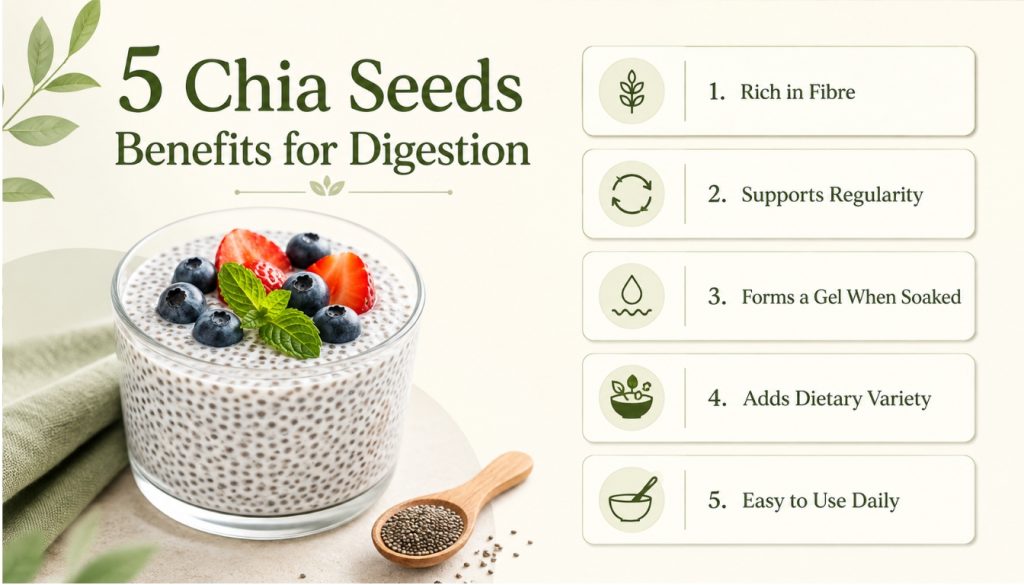
1. Chia Seeds Are Naturally Rich in Fibre
The most important digestive benefit of chia seeds comes from their fibre content.
A typical 28-gram serving—about two tablespoons—provides a substantial amount of dietary fibre.
Adding chia seeds to a balanced diet can therefore help increase total fibre intake without requiring major changes to your regular meals.
You can add a small amount to breakfast bowls, oats, yogurt, smoothies or homemade snacks.
2. Fibre Can Support Bowel Regularity
Dietary fibre helps contribute to stool bulk and supports normal movement through the digestive tract.
Because chia seeds contain a significant amount of fibre, they can form part of a dietary pattern that supports bowel regularity.
However, suddenly consuming a large amount of chia seeds may cause bloating or gas, particularly if your usual diet is low in fibre.
For this reason, increase fibre intake gradually.
3. Chia Seeds Absorb Water and Form a Gel
One of the most distinctive characteristics of chia seeds is their ability to absorb liquid.
Once soaked, a gel forms around the seeds.
This makes soaked chia seeds convenient to use in breakfast and snack recipes and provides the thick consistency associated with chia pudding and overnight oats.
4. They Add Variety to a Fibre-Rich Diet
Gut health depends on overall dietary patterns rather than any single “superfood.”
Eating a variety of plant foods provides different fibres and nutrients.
Chia seeds can be combined with:
- Oats
- Fruits
- Vegetables
- Yogurt or curd
- Nuts
- Other seeds
- Whole grains
- Pulses
This helps create meals with greater plant-food variety instead of relying solely on chia seeds.
5. They Are Easy to Add to Everyday Foods
One practical advantage of chia seeds is their mild taste.
You do not need to completely change your diet to include them.
They can be added to both sweet and savoury foods, making it easier to include fibre-rich ingredients regularly.
Should You Soak Chia Seeds Before Eating Them?
Chia seeds can be used in different ways, but soaking is one of the easiest methods.
When chia seeds are placed in water or another liquid, they absorb moisture and develop their characteristic gel.
For Pranoflax Black Chia Seeds, the suggested preparation is approximately:
2 teaspoons of chia seeds in 200 ml of water, soaked for around 5–10 minutes.
After soaking, the chia mixture can be consumed or added to other recipes.
Soaked chia seeds work particularly well in:
- Water
- Coconut water
- Smoothies
- Yogurt or curd
- Overnight oats
- Breakfast cereals
- Chia pudding
Avoid swallowing a large spoonful of completely dry chia seeds on their own. Because chia seeds can absorb a significant amount of liquid and expand, it is better to consume them appropriately hydrated or mixed into foods containing sufficient moisture.

5 Easy Ways to Use Chia Seeds
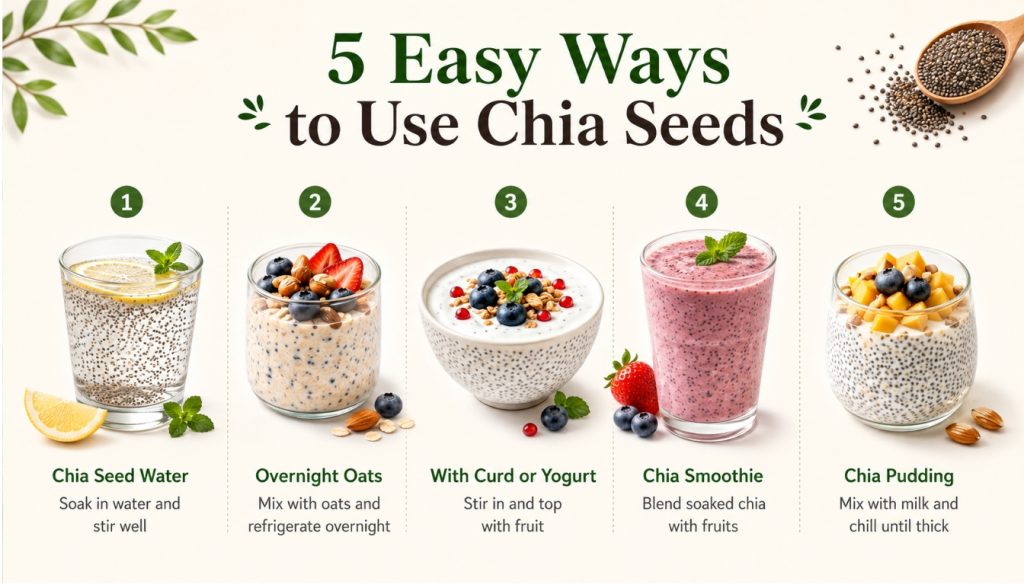
You don’t need complicated recipes to add chia seeds to your diet.
1. Chia Seed Water
Add chia seeds to water and allow them to soak until a gel begins to form.
Stir the mixture properly before consuming it.
You can also add a little lemon for flavour if you prefer.
2. Chia Seed Overnight Oats
Combine:
- Oats
- Chia seeds
- Milk or a preferred alternative
Refrigerate the mixture overnight.
In the morning, add fruit, nuts or seeds according to your preference.
This gives you an easy breakfast containing multiple plant-based ingredients.
3. Chia Seeds with Curd or Yogurt
Mix chia seeds into curd or yogurt and allow them some time to hydrate.
Top the bowl with chopped fruit, nuts or seeds.
It can be consumed as a simple breakfast or snack.
4. Chia Seed Smoothie
Soaked chia seeds can be blended into fruit or vegetable smoothies.
Banana, mango, berries and other fruits pair easily with chia because the seeds have a mild flavour.
5. Chia Seed Pudding
Chia pudding makes use of the seeds’ natural gel-forming ability.
Mix chia seeds with milk or a preferred alternative and refrigerate until the mixture thickens.
Add fruit and nuts before serving.
Soaked Chia Seeds vs Dry Chia Seeds
| Soaked Chia Seeds | Dry Chia Seeds |
|---|---|
| Already hydrated before eating | Absorb moisture after being added to food |
| Develop a gel-like texture | Initially have a crunchy texture |
| Useful for drinks and puddings | Convenient as a recipe ingredient or topping |
| Ideal for overnight oats and yogurt | Can be mixed into suitable foods and baked recipes |
| Easy to combine with moist foods | Should not be swallowed in large dry spoonfuls |
Soaking does not magically increase the nutritional value of chia seeds.
The main difference is hydration, texture and how you plan to use them.
How Much Chia Seed Should You Eat?
There is no single quantity that is ideal for everyone.
A commonly used serving of chia seeds is around 1–2 tablespoons, but someone who does not regularly consume fibre-rich foods may prefer to start with a smaller amount.
Pranoflax White Chia Seeds also provide a simple usage suggestion of approximately 2 teaspoons soaked in 200 ml of water for 5–10 minutes.
Your total diet matters more than trying to consume a large quantity of chia seeds.
If you increase your fibre intake suddenly, you may experience:
- Gas
- Bloating
- Abdominal discomfort
- Changes in bowel habits
Increase fibre gradually and maintain adequate fluid intake.
Common Mistakes to Avoid When Using Chia Seeds
Consuming Too Much Too Quickly
More chia seeds do not automatically mean greater digestive benefits.
If your body is not accustomed to a high-fibre diet, suddenly eating a large amount may lead to bloating or gas.
Start gradually.
Not Drinking Enough Fluids
Adequate hydration is particularly important when increasing dietary fibre.
Make sure your overall fluid intake remains appropriate while adding fibre-rich foods to your diet.
Eating Large Amounts Completely Dry
Chia seeds absorb liquid and expand.
Avoid swallowing large spoonfuls of completely dry chia seeds without sufficient liquid or food.
Depending Only on Chia Seeds for Gut Health
No single ingredient can provide everything needed for digestive health.
Combine chia seeds with vegetables, fruits, legumes, whole grains, nuts and other seeds.
Considering Chia Seeds a Treatment
Chia seeds are a nutritious food—not a medicine.
Persistent digestive symptoms such as severe abdominal pain, continuing constipation or diarrhoea, difficulty swallowing or blood in the stool should be evaluated by a qualified healthcare professional.
White Chia Seeds vs Black Chia Seeds: Which Is Better?
Both white and black chia seeds belong to the same plant species and can be incorporated into the diet in similar ways.
Their nutritional profiles are broadly comparable.
The biggest practical difference is generally their colour.
White chia seeds may blend more subtly into lighter dishes such as:
- Yogurt
- Overnight oats
- Smoothies
- Chia pudding
- Coconut-based recipes
Black chia seeds may appear more prominent visually.
For digestive health, the colour itself is not the main consideration. The amount you consume, your total fibre intake and the rest of your diet are more important.
Who Should Be Careful When Adding Chia Seeds?
Chia seeds are a regular food for many people, but individual tolerance can vary.
Take additional care if you:
- Have difficulty swallowing
- Have been advised to follow a low-fibre diet
- Have a gastrointestinal condition requiring dietary restrictions
- Are making a major change to your usual fibre intake
- Have been given specific dietary instructions by a healthcare professional
In these situations, individual advice from a qualified professional is more appropriate than relying on general dietary recommendations.
Frequently Asked Questions About Chia Seeds and Gut Health
Are chia seeds good for digestion?
Chia seeds are rich in dietary fibre, which contributes to normal digestive function and bowel regularity. They can therefore be included as part of a balanced, fibre-rich diet. However, chia seeds should not be considered a treatment for digestive conditions.
Can chia seeds help with constipation?
Fibre-rich foods can support normal bowel regularity, and chia seeds provide a significant amount of dietary fibre. However, constipation has many possible causes. Chia seeds should be considered part of an overall diet containing adequate fibre and fluids rather than a guaranteed remedy.
Are soaked chia seeds good for the gut?
Soaking allows chia seeds to absorb liquid and form their characteristic gel before consumption. This makes them convenient for water, yogurt, overnight oats and puddings. Their digestive value primarily comes from their dietary fibre rather than soaking itself creating a new health benefit.
Can chia seeds cause gas or bloating?
Yes. A rapid increase in fibre can cause temporary gas, bloating or abdominal discomfort in some people. If you do not regularly consume fibre-rich foods, start with a smaller quantity and gradually increase your intake.
Can we eat chia seeds every day?
Chia seeds can be included regularly as part of a balanced diet for many people. They should complement a varied diet containing fruits, vegetables, whole grains, pulses, nuts and other seeds rather than replacing those foods.
What is the best time to eat chia seeds?
There is no scientifically established best time to consume chia seeds. They can be eaten at breakfast, as part of a snack or incorporated into another meal. The overall quality and consistency of your diet matter more than eating chia seeds at a particular time.
Can I eat chia seeds with curd?
Yes. Chia seeds can be added to curd or yogurt. Allowing them some time to hydrate creates a softer texture. Fruit and nuts can also be added to create a more varied breakfast or snack.
Is chia seed water good for digestion?
Chia seed water provides hydrated chia seeds and their dietary fibre. It can be one way to include chia seeds in your diet, but it should not be marketed as a detox drink or digestive cure. Overall fibre intake, hydration and dietary variety remain more important.
Add White Chia Seeds to Everyday Meals with Pranoflax
Adding more fibre-rich plant foods does not have to make your everyday meals complicated.
Pranoflax White Chia Seeds can be soaked in water or added to yogurt, overnight oats, smoothies, breakfast cereals, salads and homemade chia pudding.
Their mild flavour and gel-forming texture make them easy to incorporate into different breakfast and snack recipes.
Combine chia seeds with a varied diet containing fruits, vegetables, pulses, whole grains, nuts and other seeds to build a balanced approach to everyday nutrition.
Explore Pranoflax White Chia Seeds

Conclusion
So, are chia seeds good for gut health?
Chia seeds can be a useful addition to a gut-friendly diet because they are naturally rich in dietary fibre. Most of their fibre is insoluble, while their soluble and gel-forming components contribute to the characteristic texture seen when chia seeds are soaked.
Their fibre content can contribute to normal bowel regularity and help increase overall dietary fibre intake.
The key is to use chia seeds sensibly.
Start with a moderate quantity, increase fibre gradually, maintain adequate hydration and combine chia seeds with a diverse range of plant-based foods.
Rather than viewing chia seeds as a cure or quick solution for digestive problems, consider them one useful fibre-rich ingredient in a balanced everyday diet.
0 Comments