
Quick answer: There is no official scientific ranking of seeds. This is a practical comparison of three nutrient-dense seeds: flaxseeds, chia seeds and hemp seeds. Flax and chia provide fibre and plant omega-3 (ALA), while hemp stands out for protein and unsaturated fats. Pumpkin seeds are also a strong choice, especially for magnesium. No single seed is essential, and your overall eating pattern matters more than any one food.
Key takeaways
- Flaxseeds: high in fibre and ALA omega-3. Grind them for easier digestion.
- Chia seeds: very high in fibre. Eat them soaked or mixed into moist foods.
- Hemp seeds: among the higher-protein seeds. Easy to eat with no grinding.
- Pumpkin seeds: especially rich in magnesium.
- Rotating a few seeds through the week works better than relying on one.
In this guide: How seeds are compared · Flaxseeds · Chia seeds · Hemp seeds · Comparison table · Which seed fits your goal · How much to eat · FAQ
Seeds are small, but they add fibre, protein, unsaturated fats, vitamins and minerals to everyday meals, and they are easy to add to breakfast, snacks and salads. This guide compares flaxseeds, chia seeds and hemp seeds, explains what each offers, and shows how to eat them.
How Are the Healthiest Seeds Compared?
No single seed is best for everyone, because “healthiest” depends on your goal. Useful things to look at include:
- Nutrient density: how many useful nutrients you get for the calories
- Fibre: important for digestion and feeling full
- Healthy fats: especially plant omega-3 (ALA) and unsaturated fats
- Protein and minerals: such as magnesium, zinc, iron and calcium
- Practicality: how easy the seed is to eat regularly
Flax, chia and hemp are nutrient-dense seeds with different strengths, which makes them useful to compare.
1. Flaxseeds (Alsi): High in Fibre and ALA Omega-3
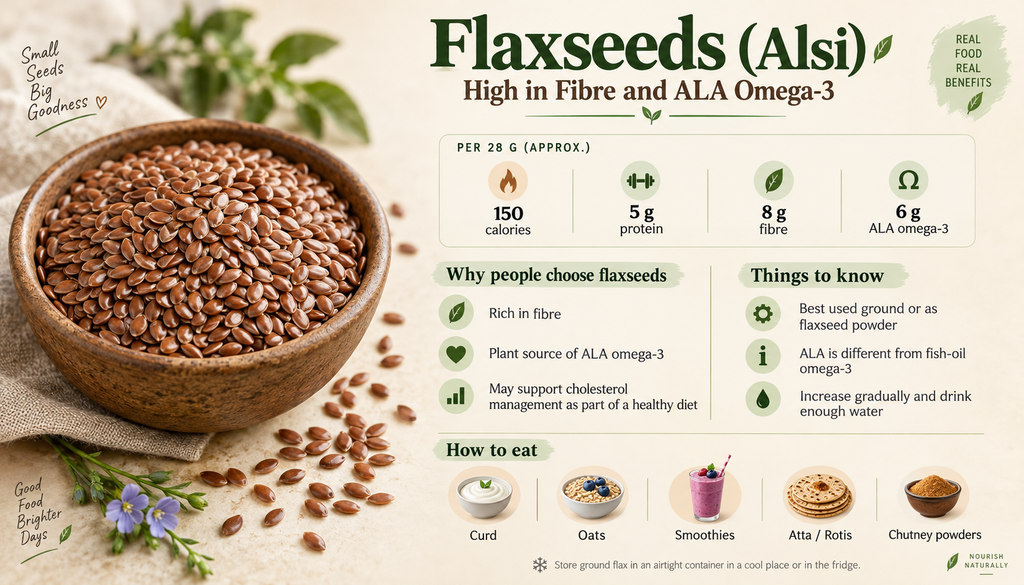
Flaxseeds are one of the richest plant sources of ALA, a type of omega-3 fat. They are also high in fibre and contain lignans, plant compounds that are being studied for their possible role in health.
Approximate nutrition per 28 g (whole flaxseed): around 150 calories, 5 g protein, 8 g fibre and 6 g ALA.
Why people choose flaxseeds:
- Very high in fibre for their size, which supports regular digestion.
- One of the best plant sources of ALA omega-3.
- Some studies suggest ground flaxseed may modestly help cholesterol levels as part of a healthy diet, though results vary.
Things to know:
- Grind them. Whole flaxseeds may pass through the body undigested, so ground flaxseed or flaxseed powder is easier to digest.
- ALA is not the same as fish-oil omega-3. The body converts only a small share of ALA into EPA and DHA, so flaxseed is a useful omega-3 source but not a complete replacement for fish or algae oil.
- Increase intake gradually and drink enough water, since a lot of fibre at once can cause bloating.
How to eat flaxseeds: Stir ground flaxseed into curd, oats, smoothies, atta for rotis, or chutney powders. Store ground flax in an airtight container in a cool place or in the fridge, since it can go stale. Explore our flaxseed collection.
2. Chia Seeds: Very High in Fibre
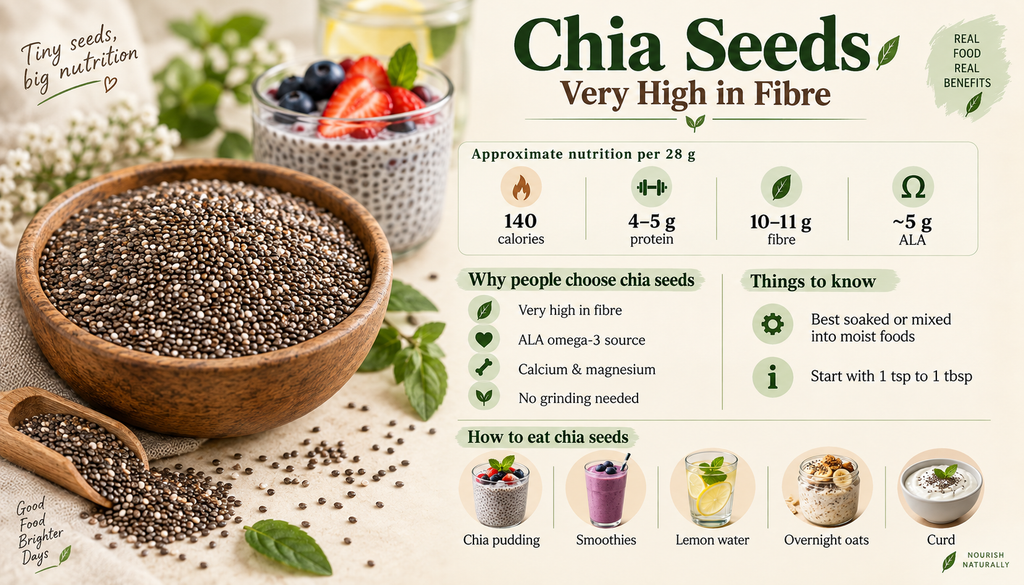
Chia seeds are tiny, but they are among the highest-fibre seeds you can eat. They also provide ALA omega-3, calcium and magnesium. When mixed with liquid, they swell into a soft gel.
Approximate nutrition per 28 g: around 140 calories, 4-5 g protein, about 10-11 g fibre and about 5 g ALA.
Why people choose chia seeds:
- Very high fibre content, which helps you feel full and supports digestion.
- A plant source of ALA omega-3.
- Contribute calcium and magnesium, which is useful for people who eat little dairy.
- Easy to use, with no grinding needed.
Things to know:
- Chia seeds are commonly consumed soaked or mixed into moist foods. Avoid swallowing large spoonfuls of dry chia, especially if you have swallowing difficulties.
- Start with 1 teaspoon to 1 tablespoon and increase slowly.
How to eat chia seeds: Make chia pudding, add chia to smoothies, lemon water or overnight oats, or stir into curd. Browse our Super Seeds collection.
3. Hemp Seeds: A Plant Protein Option
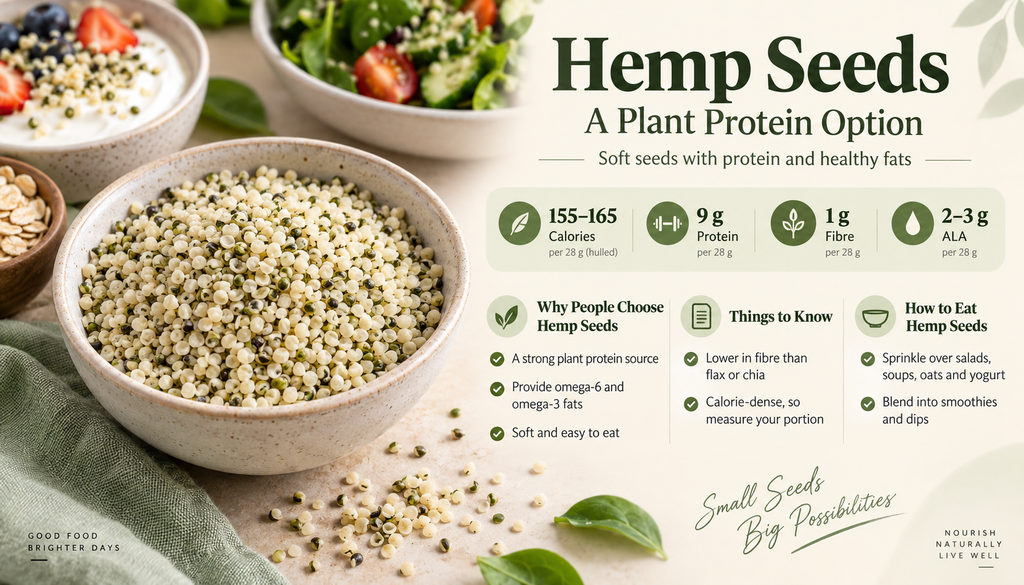
Hemp seeds (hulled hemp hearts) are soft and mild with a nutty flavour. They are one of the more protein-rich seeds and contain all nine essential amino acids, along with unsaturated fats and minerals such as magnesium.
Approximate nutrition per 28 g (hulled): around 155-165 calories, about 9 g protein, about 1 g fibre and about 2-3 g ALA.
Why people choose hemp seeds:
- A strong plant protein source, useful for vegetarians and vegans.
- Provide a mix of omega-6 and omega-3 unsaturated fats.
- Soft and easy to eat, with no soaking or grinding needed.
Things to know:
- They contain less fibre than flax or chia, so they suit a different goal.
- They are calorie-dense, so measure your portion.
How to eat hemp seeds: Sprinkle over salads, soups, oats and yogurt, or blend into smoothies and homemade dips. See our hempseed collection.
Flax vs Chia vs Hemp Seeds: Comparison Table
Values are approximate per 28 g and vary by product. Check your label or USDA FoodData Central.
| Seed | Approx. calories | Protein | Fibre | Known for |
| Flaxseeds | ~150 | ~5 g | ~8 g | ALA omega-3, lignans, fibre |
| Chia seeds | ~140 | ~4-5 g | ~10-11 g | Fibre, ALA omega-3, calcium |
| Hemp seeds (hulled) | ~155-165 | ~9 g | ~1 g | Protein, unsaturated fats |
| Pumpkin seeds (hulled) | ~155-160 | ~8-9 g | ~1.5-2 g | Magnesium, zinc, iron |
Honorable Mention: Pumpkin Seeds
Pumpkin seeds provide less fibre and omega-3 than flax or chia, but they are especially rich in magnesium and also provide zinc and iron. If those minerals are your priority, they deserve a place in your rotation. For portion sizes and side effects, read our guide on eating pumpkin seeds every day, and see how they fit into digestion in our article on pumpkin seeds for gut health.
Which Seed Fits Your Goal?
Here is some practical guidance, not a hard winner:
- Higher fibre: chia or flaxseed
- Higher plant ALA: flaxseed or chia
- Higher protein among these options: hemp seeds
- Especially rich in magnesium: pumpkin seeds
- Easy to use without grinding: hemp or chia
How Much Seed Should You Eat Per Day?
There is no single ideal amount, since needs and tolerance differ. A common starting point is 1-2 tablespoons a day of one seed or a mix. Begin with a smaller amount, increase gradually, and drink enough water. Seeds are calorie-dense, so measure portions if you’re managing your weight.
Who Should Be Careful?
Seeds are safe for most people, but consider these points:
- Digestive discomfort: Too much fibre too quickly can cause gas or bloating.
- Allergies: Seed allergies are uncommon but possible. Stop and seek medical advice if you notice itching, swelling or breathing difficulty.
- Swallowing difficulty or young children: Choose ground seeds or seeds mixed into moist foods, and ask a professional if unsure.
- Medical conditions, medication, pregnancy or breastfeeding: Speak with a doctor or registered dietitian before making regular additions to your diet.
Easy Ways to Mix Seeds Into Your Day
- Make a seed mix of ground flaxseed, chia, hemp and pumpkin seeds and keep it in the fridge.
- Add a spoonful to breakfast bowls, curd or smoothies.
- Sprinkle over salads and soups.
- Blend into energy bars or laddoos.
Frequently Asked Questions
What are the top 3 healthiest seeds?
There’s no official ranking. Flaxseeds, chia seeds and hemp seeds are three nutrient-dense seeds worth comparing, and pumpkin seeds are also a strong choice.
Which seed is best for fibre?
Among the seeds compared here, chia seeds and flaxseeds provide the most fibre.
Which seed has the most protein?
Among the seeds compared here, hemp seeds provide the most protein, about 9 g per 28 g.
Should I eat flaxseeds whole or ground?
Ground is generally better, because whole flaxseeds may pass through undigested.
Can I eat all these seeds together?
Yes, many people mix them. Start with small amounts and see how your digestion responds.
Do seeds help with weight loss?
Their fibre, protein and fats can help you feel full, but they are calorie-dense. Portion control matters.Final Thoughts
Final Thoughts
Flaxseeds, chia seeds and hemp seeds are three practical, nutrient-rich seeds. Flax and chia stand out for fibre and plant omega-3, while hemp stands out for protein. Pumpkin seeds add magnesium and zinc. Rather than looking for one “best” seed, mix a few through your week, keep portions moderate and enjoy them as part of a varied diet.
Ready to try them? Explore our Super Seeds collection, flaxseed collection and hempseed collection.
Sources and further reading: USDA FoodData Central (nutrient values), NIH Office of Dietary Supplements (magnesium), Harvard T.H. Chan School of Public Health (chia seeds), Mayo Clinic (ground flaxseed). Link each source to its page.
Disclaimer: This article is for general information only and is not medical advice. Consult a doctor or qualified dietitian before making major changes to your diet, especially if you have a health condition or take medication.
0 Comments