
Millets are versatile grains that can replace rice or wheat in many Indian meals. For beginners, barnyard millet (sanwa), foxtail millet and little millet are easy rice-style options, while ragi, bajra and jowar are commonly used as flours. Rinse well, soak if you prefer, and cook with roughly twice the volume of water as a starting point, adjusting for the millet and the texture you want.
New to millets? This guide to millets for beginners covers the main types of millets, their benefits, a simple cooking method and easy ways to add them to everyday meals.
What Are Millets?
Millets are a group of small-seeded grasses that have been grown across India, Africa and Asia for thousands of years. They are hardy crops that need little water, which is why they were everyday food long before polished rice and refined wheat took over our plates.
Millets are small grains that can provide fibre, minerals and complex carbohydrates, depending on the variety and how it is processed. They are also naturally gluten-free and easy to cook once you know the basics. Nutrition differs between types and even between batches, so treat any figure you read online as approximate and check the pack label.
Types of Millets: A Beginner’s Guide
There are many millets, but these are the ones you will meet most often:
| Millet | Also called | Taste and texture | Good for |
| Barnyard | Sanwa, Samvat rice | Mild, light, rice-like | Khichdi, pulao, kheer, fasting meals |
| Foxtail | Kangni, Kakum | Slightly nutty, soft | Upma, pongal, pulao |
| Little | Kutki, Samai | Delicate, cooks soft | Pulao, curd rice |
| Kodo | Kodra | Mild, slightly chewy | Pulao, khichdi |
| Proso | Cheena | Mild, slightly creamy | Porridge, kheer |
| Finger | Ragi, Mandua | Earthy; flour is dark | Rotis, dosa, porridge |
| Pearl | Bajra | Strong, robust | Rotis, winter khichdi |
| Sorghum | Jowar | Mild, slightly sweet | Rotis, bhakri |
A simple way to choose: barnyard, foxtail and little millet are the easiest rice-style swaps, because the whole grains cook much like rice. Ragi, bajra and jowar are more often used as flour, and ragi in particular is excellent for rotis, dosa and porridge. If you are just starting, begin with a rice-style millet. You can explore the full range in our Millets collection.
Benefits of Millets
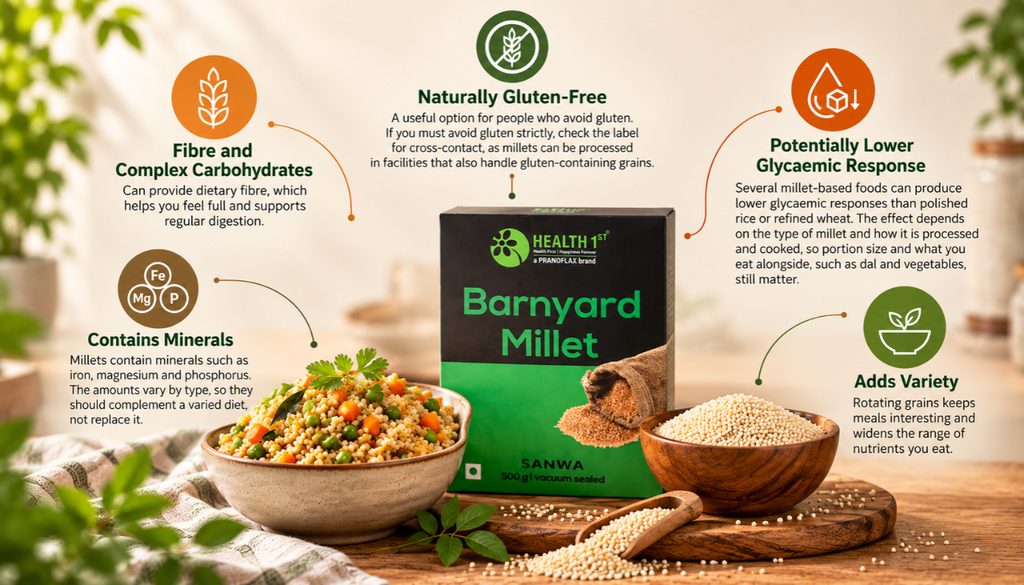
Millets are not a miracle food, but they are a smart addition to a balanced diet. Here is what they realistically offer:
- Fibre and complex carbohydrates: Depending on the variety and processing, millets can provide dietary fibre, which helps you feel full and supports regular digestion. If gut health is your goal, our guide to pumpkin seeds and gut health covers other fibre-rich foods worth pairing with millets.
- Naturally gluten-free: Millets are a useful option for people who avoid gluten. If you must avoid gluten strictly, check the label for cross-contact, as millets can be processed in facilities that also handle gluten-containing grains.
- Potentially lower glycaemic response: Evidence suggests several millet-based foods can produce lower glycaemic responses than polished rice or refined wheat. The effect depends on the type of millet and how it is processed and cooked, so portion size and what you eat alongside, such as dal and vegetables, still matter. If you have diabetes, discuss changes to your diet with your doctor.
- Minerals: Millets contain minerals such as iron, magnesium and phosphorus. The amounts vary by type, so they should complement a varied diet, not replace it.
- Variety: Rotating grains keeps meals interesting and widens the range of nutrients you eat.
How to Cook Millets: A Simple Method
This basic method works for most rice-style millets:
- Rinse: Wash the grains two or three times in clean water until it runs mostly clear.
- Soak (optional): Soak for 30 minutes to a few hours. Soaking can shorten the cooking time and may improve texture, and some people also find soaked millets easier to tolerate.
- Measure the water: Start around 1 cup of millet to 2 cups of water, then adjust by millet type and the texture you want. Use more water for a soft porridge or kheer, and less for separate, fluffy grains.
- Cook: Bring to a boil, then cover and simmer on low heat until the water is absorbed and the grains are tender. Small millets like barnyard often cook in roughly 12 to 15 minutes, but timing varies with the millet and whether you soaked it.
- Rest: Let it sit covered for 5 minutes, then fluff with a fork.
Tip: Dry-roasting the grains for a minute or two before cooking gives a nuttier flavour and helps them stay separate.
Easy Ways to Eat Millets
You don’t need entirely new recipes. Swap millets into dishes you already make:
- Khichdi or pulao: Use a rice-style millet in place of rice, with moong dal and vegetables.
- Upma or pongal: Millets work well in these South Indian favourites.
- Porridge: Cook with milk or a plant-based drink and top with fruit.
- Kheer: A light, festive dessert, and a popular fasting-day dish.
- Rotis, chillas and dosa: Use millet flours such as ragi, bajra or jowar for flatbreads, savoury pancakes and batters.
Finish a millet dish with a tadka in a good oil. Our guide to cold-pressed vs refined oil explains how to choose. For a crunchy topping, try the ideas in our post on Indian recipes with pumpkin seeds, or see our comparison of the top 3 healthiest seeds for more ways to build a nutritious plate.
Why Start with Barnyard Millet (Sanwa)?
If you are new to millets, barnyard millet is one of the friendliest choices. It has a mild taste, a light texture and cooks quickly. It is also a familiar name in Indian homes, since sanwa is a favourite during fasting days.
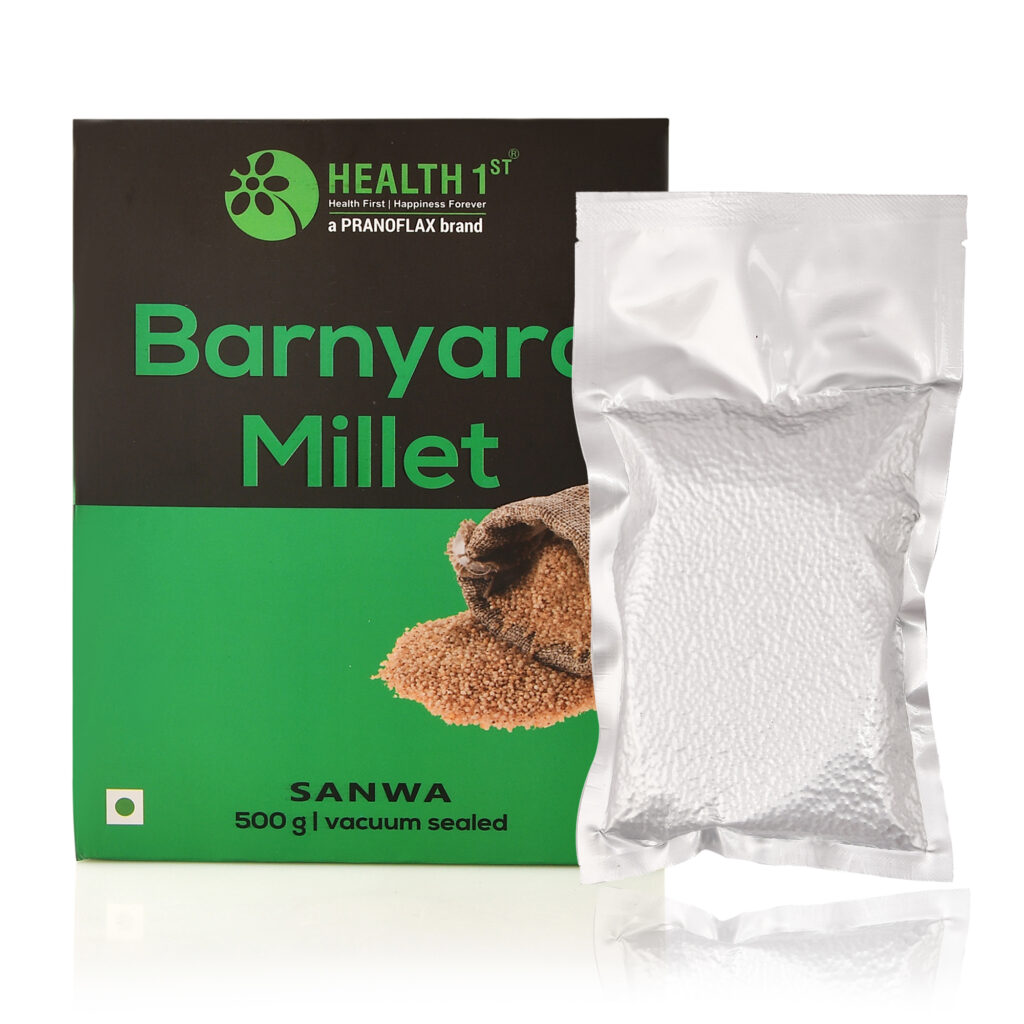
Health 1st Barnyard Millet (Sanwa) works well in many rice-style dishes such as pulao, khichdi, upma, pongal, porridge and kheer. You can also grind it into flour for rotis, chillas, dosa or porridge. Some points worth knowing:
- Sold in a 500 g vacuum-packed pack
- Shelf life of 12 months
- Vegetarian
- Packed in a facility that also handles dried berries, almonds, peanuts, sesame, walnuts and other oilseeds, so check this if you have allergies
You will find it in our Fiber Rich Foods range alongside other everyday staples.
How to Store Millets
Keep millets in an airtight container at room temperature, away from heat and light. Refrigeration can help them stay fresh longer, especially in hot, humid weather. Always use a dry spoon to keep moisture out.
Frequently Asked Questions About Millets
Are millets better than rice?
Not universally. They have a different nutrient profile, and many millets provide more fibre than polished rice, but both can fit into a balanced diet. Many people simply alternate between them.
How often should I eat millets?
Start with two or three meals a week and increase gradually. A sudden jump in fibre can cause bloating, so drink enough water as you go.
Do I have to soak millets?
No. Soaking is optional. It can shorten cooking time and may improve texture, and some people find soaked millets easier to tolerate.
Can children eat millets?
Yes, in age-appropriate forms such as soft porridge or khichdi. For infants, check with your paediatrician before introducing new grains.
Final Thoughts
Starting with millets is simple. Pick one rice-style millet, rinse, soak if you like, and cook it much as you would rice, then build from there. Barnyard millet is a gentle first step, and once you are comfortable you can move on to foxtail, little millet, ragi and the rest of the family.
Ready to try? Pick up Health 1st Barnyard Millet (Sanwa) or explore the full Millets collection at Pranoflax.
0 Comments