
The main benefits of hemp seeds are that they provide plant protein with all nine essential amino acids, unsaturated fats including omega-3 ALA, magnesium and other minerals, some fibre, and possible heart and skin support, though that last point has limited evidence. About 3 tablespoons (30 g) of hulled seeds gives roughly 9 to 10 g of protein and 166 kcal, so portion size matters.
Hemp seeds are showing up in more Indian kitchens, but it is hard to separate real benefits from marketing. This guide explains five benefits of hemp seeds and what the evidence does and doesn’t support.
What Are Hemp Seeds?
Hemp seeds come from the hemp plant, a variety of Cannabis sativa grown for fibre and food. They are small, cream-coloured seeds with a mild, slightly nutty flavour. Seeds sold for food come from low-THC hemp varieties and are not psychoactive.
They are sold in two forms. Whole seeds still have their crunchy outer hull. Hulled seeds, often called hemp hearts, have the hull removed, which makes them softer and milder. The numbers in this guide are for hulled seeds, so check the label of the pack you buy.
Hemp Seeds Nutrition at a Glance
Here is what hulled hemp seeds provide, based on USDA FoodData Central (“Seeds, hemp seed, hulled”):
| Nutrient | Per 100 g | Per 30 g (about 3 tbsp) |
| Energy | 553 kcal | about 166 kcal |
| Protein | 31.6 g | about 9.5 g |
| Total fat | 48.8 g | about 14.6 g |
| Carbohydrates | 8.7 g | about 2.6 g |
| Dietary fibre | 4.0 g | about 1.2 g |
| Magnesium | 700 mg | about 210 mg |
Values vary by brand and batch, so treat these numbers as a guide, not an exact label.
5 Benefits of Hemp Seeds
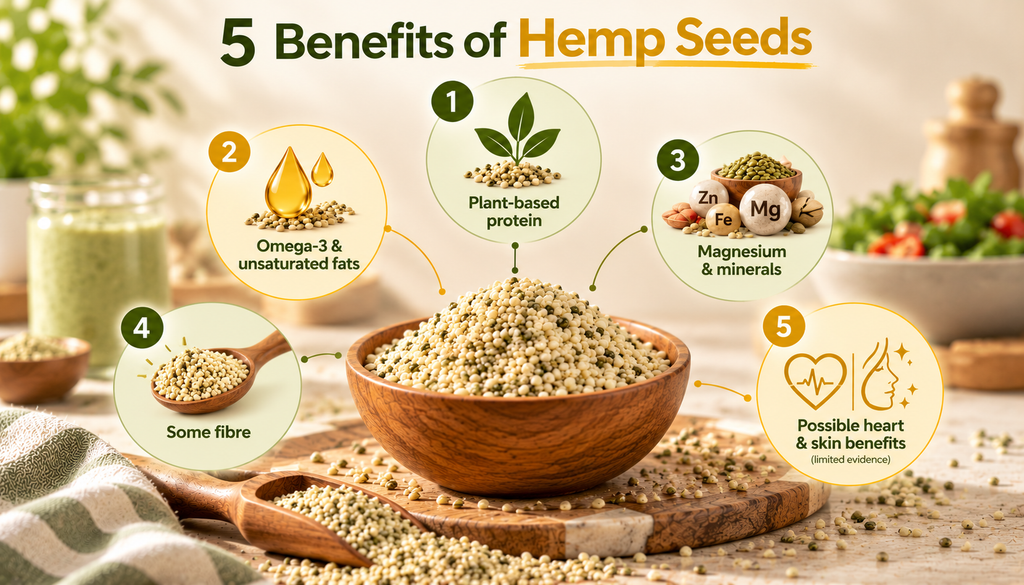
Hemp seeds are a nutritious addition to a balanced diet, not a cure for any condition. Here are the five benefits that stand up best.
1. A source of plant-based protein
Hemp seeds provide about 9.5 g of protein per 30 g serving, and they contain all nine essential amino acids. That makes them useful for vegetarians who want more variety in their protein sources. Lysine is relatively low, so hemp seeds work best alongside dal, dairy or grains such as millets. Our millets for beginners guide shows how to build balanced plant-based meals.
Among hemp, chia and flax, hemp provides the most protein per serving. Our guide to the top 3 healthiest seeds compares all three.
2. Unsaturated fats, including omega-3 ALA
Most of the fat in hemp seeds is polyunsaturated. Per 100 g that includes roughly 9 g of omega-3 (ALA) and 29 g of omega-6 fats, a ratio of about 3 to 1. Replacing some saturated fat in your diet with unsaturated fat is generally linked with better heart health.
The body converts ALA to EPA and DHA only to a limited extent, so hemp seeds should not be treated as a replacement for fish or algae oil. If omega-3 is your main goal, see our comparison of chia seeds vs flax seeds, or try Whole Flaxseed Grains, which are especially rich in ALA.
3. Magnesium and other minerals
Hemp seeds are a rich source of magnesium, with about 210 mg in a 30 g serving. A 30 g serving provides a substantial amount of magnesium, which supports normal muscle and nerve function and energy metabolism. Hemp seeds also provide iron, zinc and phosphorus. Mineral content varies by brand and batch, so use these as a general guide.
4. Fibre for fullness and digestion
Fibre helps you feel full and supports regular digestion. Much of the fibre in hemp seeds sits in the hull, so hulled seeds provide only a modest amount, about 1.2 g per 30 g, while seeds sold with the hull usually contain more. For more fibre, pair hemp seeds with Chia Seeds or read our post on pumpkin seeds and gut health.
5. Possible heart and skin benefits (limited evidence)
Hemp seeds are often linked with heart health and skin comfort because of their fat profile. Most of this research is small or early, and some of it uses hemp seed oil rather than whole seeds. Hemp seeds are a good food to eat, but they should not be relied on as a treatment for any condition.
How Much Hemp Seed Should You Eat?
There is no official recommended intake for hemp seeds. As a practical starting point, many people have 1 to 2 tablespoons (about 10 to 20 g) a day. Hemp seeds provide around 55 kcal per tablespoon, so measure your portion if you are watching your weight. Increase the amount gradually if you do not usually eat much fibre or fat.
Who Should Be Careful?
Most people can eat hemp seeds safely, but keep these points in mind:
- Allergies: introduce them carefully if you have a history of seed, nut or food allergy.
- Calories: measure your portions if you are managing your weight.
- Pregnancy and medical conditions: check with your doctor before making large changes to your diet, especially if you take regular medication.
- Infants: ask your paediatrician before offering seeds to babies.
Hemp Seeds vs Hemp Seed Oil
These are different products. The seeds provide protein, minerals and some fibre. The oil is almost entirely fat and is commonly used in dressings or as a finishing oil. Check the product’s cooking guidance before heating. To understand how pressing methods differ, read our guide to cold-pressed vs refined oil, or look at Health 1st Cold Pressed Hempseed Oil.
How to Store Hemp Seeds
Keep hemp seeds in an airtight container, away from heat and light. Their high polyunsaturated fat content makes them go rancid faster than many other seeds, so refrigerate them in warm weather. If they smell sharp, bitter or rancid, throw them away.
Health 1st Hemp Seeds from Pranoflax
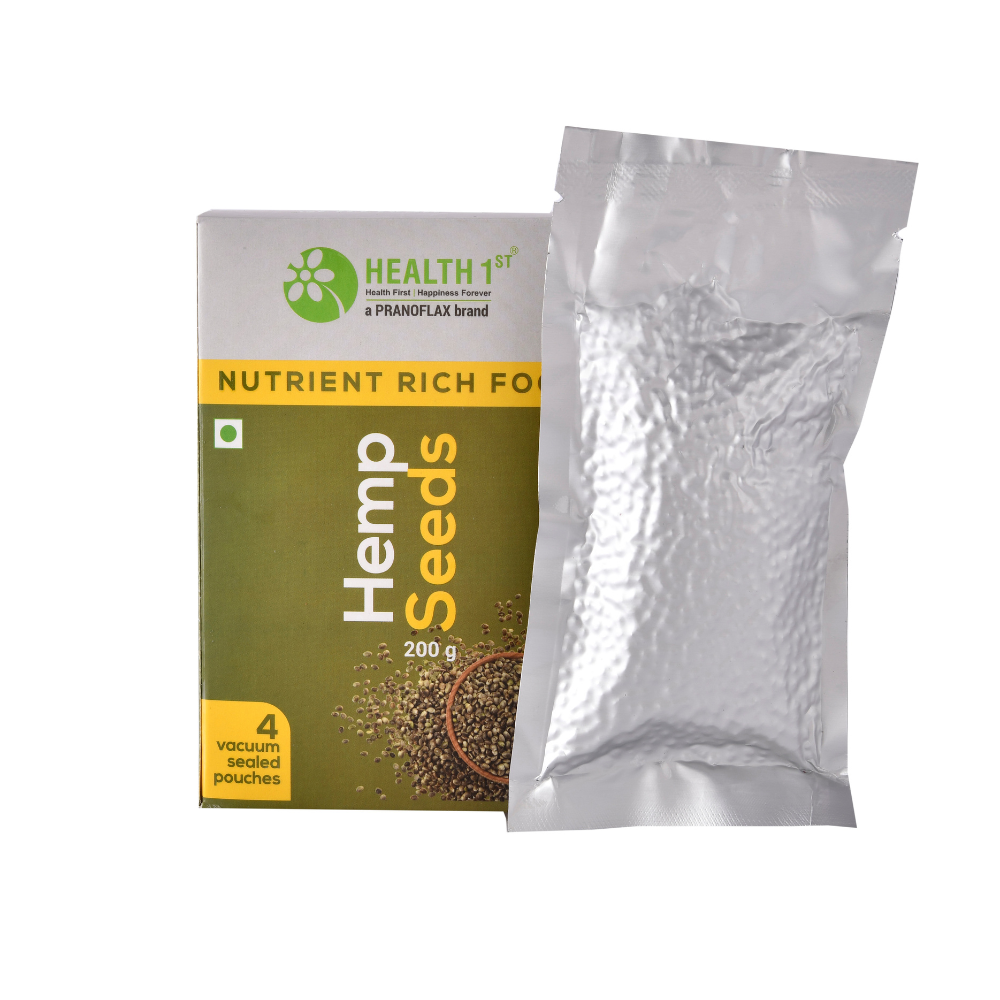
Health 1st Hemp Seeds come in a vacuum-packed 200 g pack with a 12-month shelf life, and they are vegetarian. The pack is made in a facility that also handles dried berries, almonds, peanuts, sesame, walnuts and other oilseeds, so check this if you have allergies.
You can browse the full Hempseed Collection, or explore our Super Seeds range, which also includes chia, flax, pumpkin and sunflower seeds, so you can rotate seeds through the week.
Frequently Asked Questions About Hemp Seeds
Are hemp seeds good for you?
Yes, in moderate amounts. They provide protein, unsaturated fats and minerals such as magnesium, and they fit best into a varied diet.
Will hemp seeds make me high?
No. Hemp seeds sold for food come from low-THC hemp varieties and are not psychoactive. Buy from a reputable brand with a valid FSSAI licence.
Are hemp seeds better than chia or flax seeds?
They are different, not simply better or worse. Hemp provides more protein per serving, while chia and flax provide more fibre and ALA omega-3.
Can I eat hemp seeds every day?
Many people include 1 to 2 tablespoons in their daily diet. Watch your total calorie intake, and check with your doctor if you have a medical condition.
Final Thoughts
The best-supported benefits of hemp seeds are plant protein, unsaturated fats and minerals, with some fibre and a few possible extras. Keep the portion modest, choose a fresh, well-packed product and store it properly.
Ready to try? Pick up Health 1st Hemp Seeds or explore the full Hempseed Collection at Pranoflax.
0 Comments